Introduction
The world’s largest humanitarian organization fighting global hunger is the World Food Programme (WFP), and it is also the food-assistance branch of the United Nations. WFP’s goal in Pakistan is to help vulnerable families and communities get access to the adequate and nutritious food needed to survive. This is particularly true in areas plagued by poverty, natural disasters, and conflict.
With the increased food insecurity and decreased availability of food in the market due to the recent global and local economic upheavals, WFP also plays an important role in Pakistan through the timely provision of food and sustainable food programs, which is why WFP’s support is imperative. This guide will inform you of WFP’s objectives, projects, food assistance programs, the eligibility requirements, and how WFP support can be accessed by families to improve their food security situation.
What is the World Food Programme?
As an international organization, WFP is a member of many countries, and is given the task of fighting hunger in the world. Therefore, in every country, WFP has a set of goals to achieve, which in this case, are the following:
- Give out emergency food assistance to those who have been affected by disasters.
- Help provide nutrition programs for the elderly and children.
- Teach food security, nutrition, and livelihood practices, and how to provide these to the community.
- Collaborate with the community and the local government in food provision activities.
Collaborating with government institutions, NGOs, and communities in Pakistan is how WFP is able to achieve the aims stated above.
Objectives of WFP in the Pakistan
Some of the objectives of the WFP include;
- Targeting hunger and malnutrition
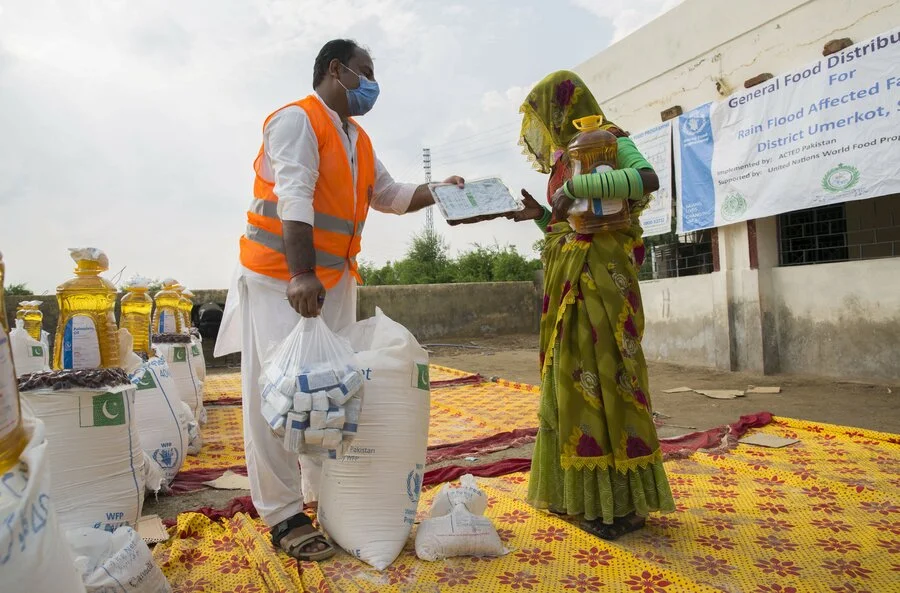
- Supporting the distribution of emergency food in times of natural disasters
- Giving school feeding programs to enhance the learning experience of students
- Improving the food insecurity in the most at risk and vulnerable regions
- Improving the agricultural and livelihood prospects
These objectives are in line with the United Nation’s Sustainable Development Goals to have a world free of hunger by the year 2030.
Key Programs and Projects
WFP has numerous ongoing projects in the vicinity of Pakistan with the aim of ensuring food security and developing the surrounding community.
Emergency Food Assistance
This is done in the case of disasters like floods and earthquakes and in war zones to make sure that families get support.
School Meals Program
This is a program that is aimed at providing meals that are nutritious and healthy to children to help improve school participation.
Nutrition Support Programs
This program aims to fight malnutrition in children less than 5 years as well as women that are either pregnant or are breastfeeding.
Livelihood Support
This is aimed at providing the community with the needed tools and knowledge to produce food sustainably.
Cash Based Transfers
In certain places, WFP provides financial assistance to families to provide them the freedom to purchase food. This program also supports the existing economy by providing a means to purchase food.
Who Can Benefit from WFP Programs?
WFP focuses on these groups:
- Low-income and vulnerable families
- Communities affected by natural disasters
- Malnourished children and women
- Refugees and displaced populations
- Rural communities with limited access to food
Together with partner organizations, they determine eligibility.
How to Access WFP Assistance
Step 1. Go to the WFP office close to you.
Call WFP offices or partner NGOs to ask about available programs.
Step 2. Register
Provide family and household details so WFP can verify eligibility by comparing household size and income.
Step 3. Receive Aid
WFP assists eligible families with:
- Food packages with rice, wheat, and pulses
- Nutritional supplements for children and mothers
- Cash support in certain programs
Step 4. Follow Up
WFP beneficiaries have food security and support from WFP to monitor this.
What are the WFP Programs’ Advantages?
Food Security: Consistent nutritious food supply
Health and Nutrition: Programs are designed for malnutrition prevention
Education Support: School meals allows children to attend school
Economic Empowerment: Local markets are stimulated by cash programs
Relief from Disaster: Immediate assistance in periods of emergencies
WFP builds long-term community resilience while addressing the hunger challenges of vulnerable groups.
EMERGENCY ASSISTANCE
The World Food Programme (WFP) provides emergency assistance to Pakistan, which is susceptible to natural disasters, including floods, earthquakes, and droughts. During a natural emergency, the WFP does the following:
- Deploys rapid response teams
- Provides emergency food
- Provides safe drinking water, nutrition, and other assistance
- Works with international and local agencies
Because of WFP’s rapid response, hunger emergencies may be prevented.
WFP’s COMMUNITY DEVELOPMENT PROGRAMMES
WFP also focuses on the following initiatives:
- Assisting small-scale farmers;
- Encouraging sustainable agricultural practices;
- Providing vocational support to youth and women;
- Improvement of local food supply chains.
In time, these initiatives reduce the need for development assistance and encourages self-reliance.
WFP’s CHALLENGES
The WFP faces a number of challenges:
- Food security and climate change.
- Inadequate and restrictive funding.
- Insufficient food safety and quality
- Accessibility to food insecure areas (particularly conflict affected areas).
WFP, in cooperation with various Governments and NGOs, minimizes the challenges, providing assistance as best as possible.
WFP’S CONTRIBUTIONS TO PAKISTAN’S SDGs
WFP works in collaboration with the UN 2030 Agenda for Sustainable Development Goals (SDGs). In Pakistan, WFP works towards the following SDGs:
SDG 3 – Good Health and Well Being (Nutrition assistance and safe drinking water)
SDG 4 – Quality Education (School feeding Programme)
SDG 5 – Gender Equality (Empowering Women)
SDG 8 – Decent Work and Economic Growth
WFP’s support to the most vulnerable communities of Pakistan increases their living standards as well as the overall resilience of the communities.
FAQs
What does WFP mean?
The WFP stands for World Food Programme, the food assistance branch of the United Nations.
Who does the WFP help in Pakistan?
The WFP helps low-income families, communities impacted by disasters, women, and malnourished children.
Does WFP help with cash or food?
The help varies depending on the program and the context of the situation.
How does one get help from the WFP?
To get help from the WFP, you can visit the WFP offices around you, or the partner NGOs, and enroll in one of the programs.
What does WFP hope to achieve in Pakistan?
The WFP hopes to fight hunger, alleviate and fight poverty, promote education, and create self-sustainable societies.
Wrapping up
The World Food Programme is one of the many organizations that is working to bring hunger and food insecurity in Pakistan to transformation. The WFP is helping communities that are in danger by giving them the food support that they need, and the helping hand to self-sustain their future.
WFP and the partner organizations are encouraging families to visit them so that they can help them get programs that can help them to get food that is healthy and nutritious.